

Several major Kenyan media outlets have recently published articles noting that, against a backdrop of global turbulence, China’s annual “Two Sessions” parliamentary meetings are sending a positive signal to the world, offering new development opportunities and injecting stability and certainty into global growth — with far-reaching implications.
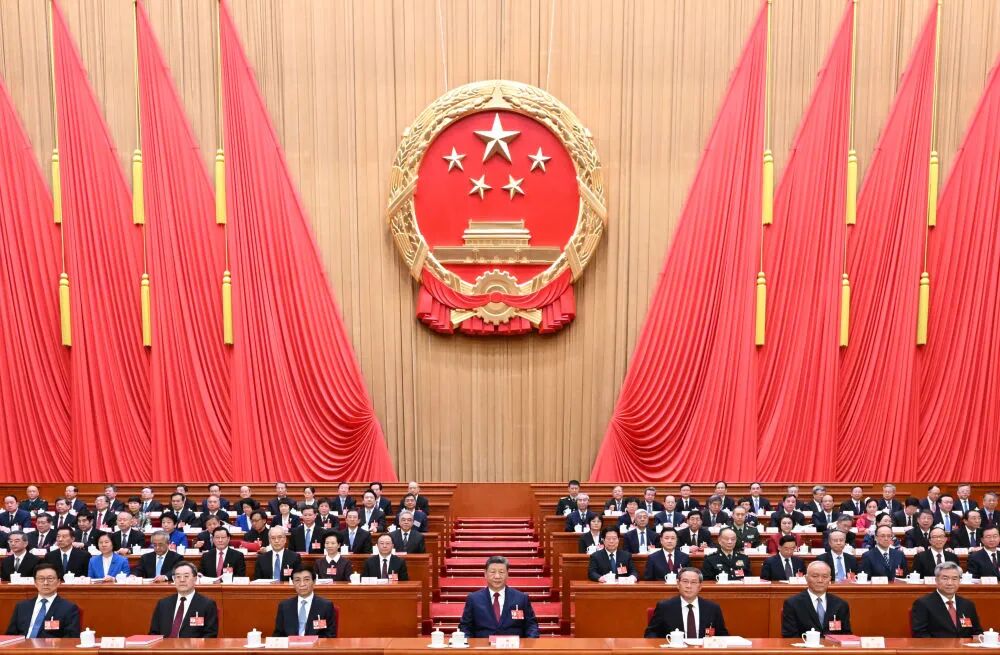
The fourth session of China’s 14th National People’s Congress adjourned on the afternoon of March 12 at the Great Hall of the People in Beijing
China’s 15th Five-Year Plan (2026–2030) emphasises further efforts to diversify supply chains and expand green energy cooperation. Kenya, the articles suggest, can leverage this to find new room for growth in industries such as electric mobility, renewable-energy components, and digital services. China’s green transition has global spillover effects. As the deployment of renewable energy and low-carbon technologies accelerates, the costs of solar, wind and battery storage are likely to continue falling — and Kenya stands to benefit from technology transfer, climate finance, and industrial collaboration.
Capital FM, a Kenyan news website, notes that the “Two Sessions” have broad implications for Kenya, for the African continent as a whole, and for the Global South. China’s emphasis on innovation-driven development and a comprehensive green transition — including a shift toward high-tech manufacturing, renewable energy, and digital infrastructure — presents important cooperation opportunities for African economies.
The People, a Kenyan newspaper, argues that as one of the world’s major economies, China’s policy direction has a bearing on global trade, investment patterns, and technological cooperation. Many developing countries see China not only as a trading partner but also as a source of development lessons. For African nations including Kenya, China’s sustained focus on infrastructure, industrial cooperation, and technological innovation creates partnership opportunities. Collaboration in areas such as renewable energy, manufacturing, and digital infrastructure, the paper adds, could help accelerate the continent’s development.